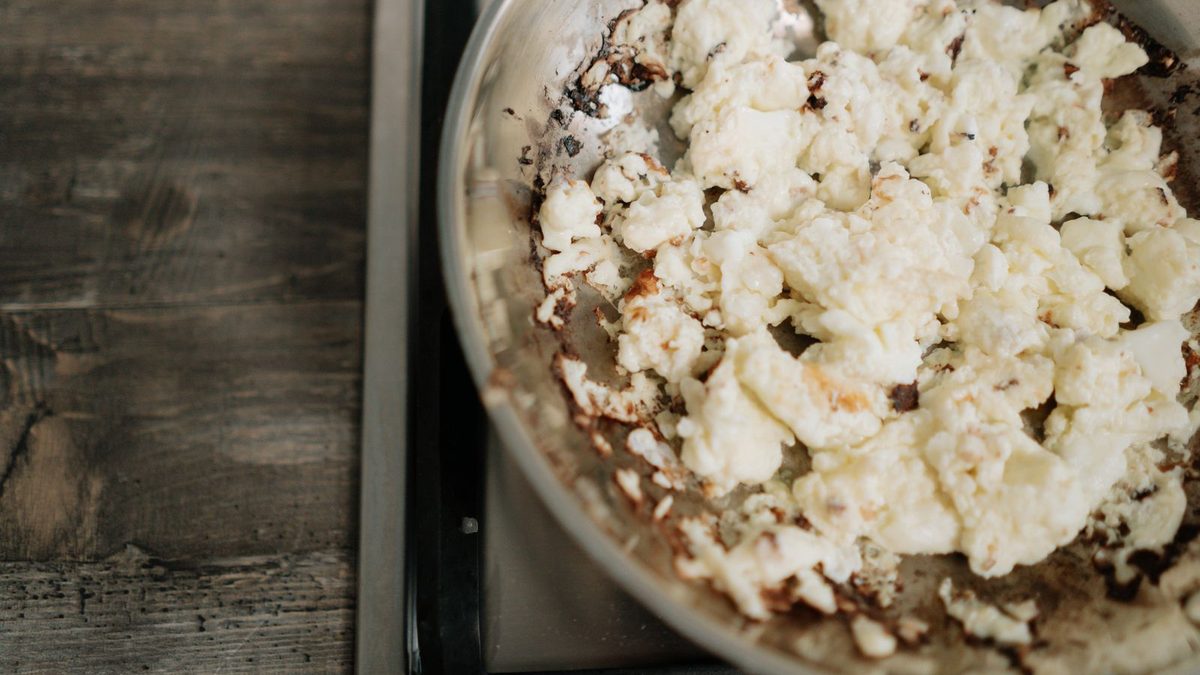
Burning food isn’t a cooking problem. You know how to cook the chicken. The problem is the four minutes between flipping it and the next thing, when the dishwasher needs unloading and your brain decides that’s where it would rather be. A thread on r/ADHD this week had forty people describing the same four minutes, one of them ending in a small kitchen fire. Here’s what they’d worked out between them, and the two things I’d add.
Set the timer for the next thing you have to do, not for when the food is done
Everyone says “use timers”. Most people already do, and the food still burns, because of what the timer is for. A ten-minute timer for “chicken” goes off and you stand there trying to remember what it meant. Was that the flip, or done? By the time you’ve worked it out you’ve lost a minute, and if you’d already wandered off, the alarm is just a noise in another room.
Set it for the action instead. “Flip the chicken” in four minutes. “Add the garlic” in two. “Check the rice” in twelve. When it goes off, your hands know what to do before your head catches up. Short timers also mean you’re never more than a few minutes from being pulled back, which is the actual protection. Not the alarm, the leash.
Where the timer lives matters too. A phone face-down on the counter, or in your pocket, is a timer you have to remember exists. Prop it up where you can see the count running down, or wear it on a watch. One person in the thread sets a three-minute timer on her watch every time she steps away from the stove, and turns the heat down as she goes. That’s the whole method in one sentence.
Heat goes to low before you walk away, for any reason
This is the one nobody in the thread said outright. High heat gives you about a minute of forgetting before something is ruined. Low heat gives you ten, sometimes twenty. Nothing I’ve ever burned was on low. Everything I’ve burned was on high.
So make it a reflex: the hand that reaches for the phone, the door or the dishwasher turns the knob down first. You can always bring it back up. Onions that sat on low for fifteen minutes are fine. Onions on medium-high for fifteen minutes are a new pan.
The same goes for anything boiling. A pot of water on high boils dry in twenty or thirty minutes, and an aluminium pot that has boiled dry can get hot enough to melt on an ordinary stove, which one commenter found out the expensive way. If the water needs to simmer while you do something else, it gets a lid, a low flame and a timer.
One live pan at a time. Everything else goes in something that switches itself off
Several people had quietly given up cooking two things at once. I think that’s the right instinct, badly stated. The rule isn’t one dish, it’s one thing that can burn. Anything else on the go should be in an appliance that stops on its own: a rice cooker, an Instant Pot, an air fryer, a slow cooker, a toaster oven with a timer that cuts the heat. The original poster already owned three of those, which is exactly why the stovetop is where it keeps going wrong.
In practice that means sequencing. Rice goes in the cooker first, because it will look after itself. Vegetables roast in the oven on a timer that at least shouts, if it won’t switch off. The one pan that needs you, the sear, the stir-fry, the sauce, happens last, when nothing else is competing for your attention. If a recipe wants two pans going at once, cook one part ahead and reheat it. Thirty seconds in the microwave costs you nothing. A burned pan costs you dinner.
If you’re buying anything, buy for this. A portable induction burner with a shut-off timer, which a couple of people in the thread swore by, turns the stovetop into one more appliance that stops by itself.
Don’t walk away from the stove. Not the kitchen, the stove
The most-upvoted comment made this distinction and it’s sharper than it sounds. Most people who burn dinner never left the kitchen. They unloaded the dishwasher, wiped the counter, started a side, all within sight of the pan, and the pan burned anyway, because looking at something isn’t the same as attending to it.
For anything that takes under about fifteen minutes, the thread’s answer was simply: do nothing else. Stand there. Several people admitted that standing at a stove for six minutes is genuinely uncomfortable, a restlessness that feels almost physical, and on a bad day they can’t make themselves do it. Things that helped them: music, which also gives you a sense of time passing (a song is three or four minutes, about one flip); saying it out loud, “I’m setting the timer”, “the stove is on”, which sounds silly and works; and a house rule that nobody starts a conversation with the cook while a burner is lit.
For anything over fifteen minutes, you’re not standing there, and that’s fine. That’s what the low heat, the action timers and the self-stopping appliances are for.
When it does go wrong
It will, occasionally. Keep a lid within reach of the stove. If a pan catches, turn off the heat, slide the lid on and leave it there; don’t carry the pan anywhere, and never put water on burning oil. Smoke without flames: heat off, pan off the burner, window open, and go and have a sad look at it in a minute. A small kitchen extinguisher or a fire blanket on the wall costs less than one takeaway, and you’ll be glad of it exactly once.
The timer-for-the-next-step idea is also why Sorrel’s cook screen works the way it does: a step that says “4 minutes” carries its own timer named after that step, the screen stays awake while you cook, and the countdown sits on the lock screen when you do wander off. I make Sorrel; it’s free, and this part doesn’t need an account. But a phone timer named “flip” does the same job.